How Two Medical Students Built Visual Study Guides for Korea's Medical Licensing Exam
 Hyeonbin
How Y and L used Arky to turn what they learned into visual study guides for the Korean Medical Licensing Examination and Clinical Performance Examination (CPX).
Hi, I'm Hyeonbin from Arky. We spoke with Y and L, two graduating students at the College of Medicine, The Catholic University of Korea. They shared how they used Arky to prepare for the Korean Medical Licensing Examination and the Clinical Performance Examination (CPX).
How did you usually study?
Y: During medical school, I mostly studied by reading rather than making my own notes. I would simply read through the material before an exam. The licensing exam, however, covers a much broader range than our medical school exams, and I was determined to do well. That made me want to create a comprehensive study guide of my own.
H: How did you both discover Arky?
L: One of Arky's co-founders is someone I know, so that's how I first heard about it. I was curious to see how it could fit into my studies, so I decided to try it first.
Y: I saw L using Arky to study and decided to try it too. I began using it regularly at the start of this year.
What was it like to organize your notes in Arky for the first time?
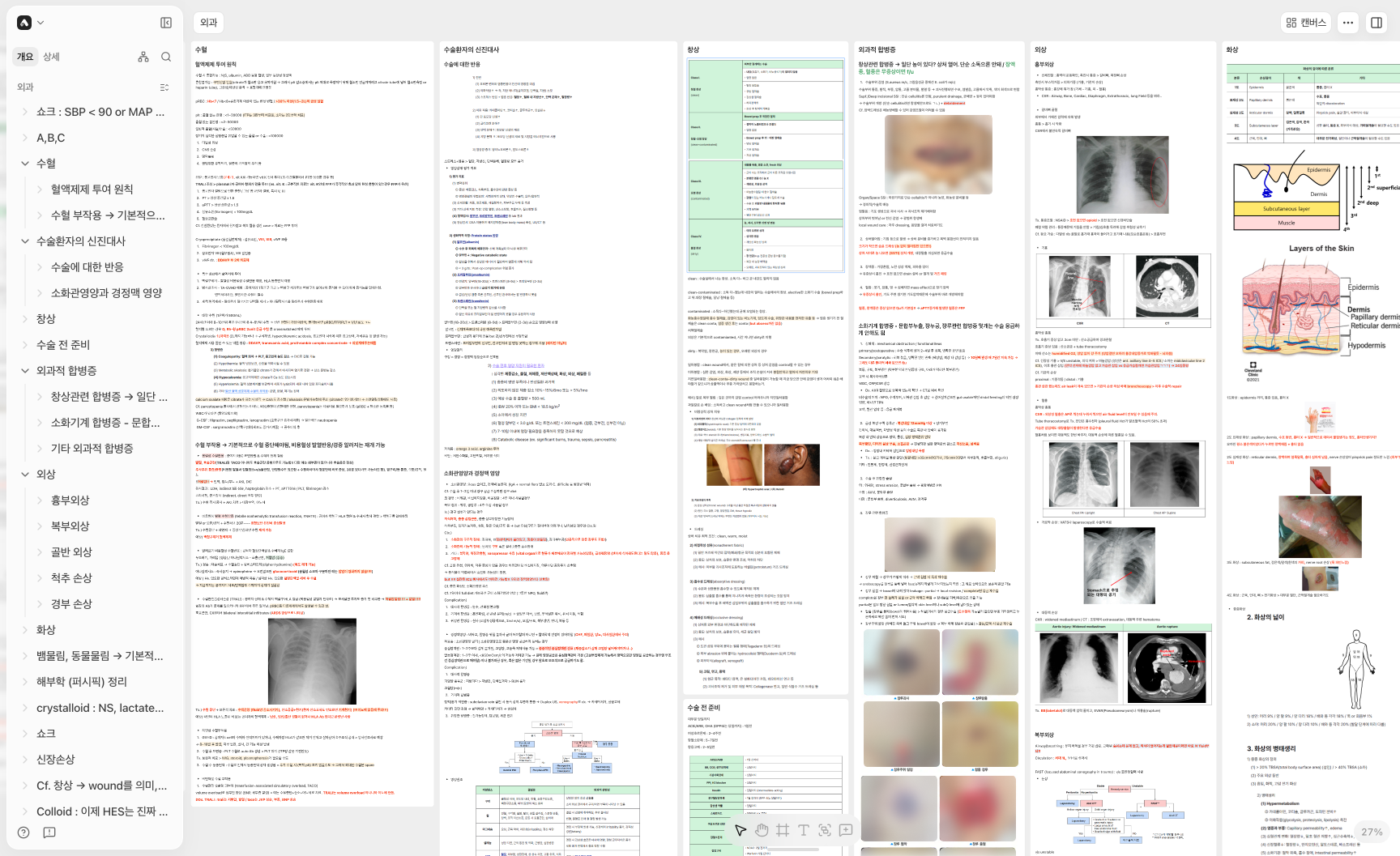
Y: Arky's biggest strength was how intuitive it felt. I wasn't used to organizing my notes systematically, so at first I didn't know where to begin. But shell cards let me add and arrange ideas wherever it felt natural, so even on my first try I could start building out my notes without much difficulty. I started with just a few lines, and before I knew it, my own study guide had taken shape.
What is a shell card?
A shell card is Arky's basic container for content. It can hold text, images, and tables, and shell cards can be nested inside one another to organize ideas hierarchically.
How did you structure your subjects and units?
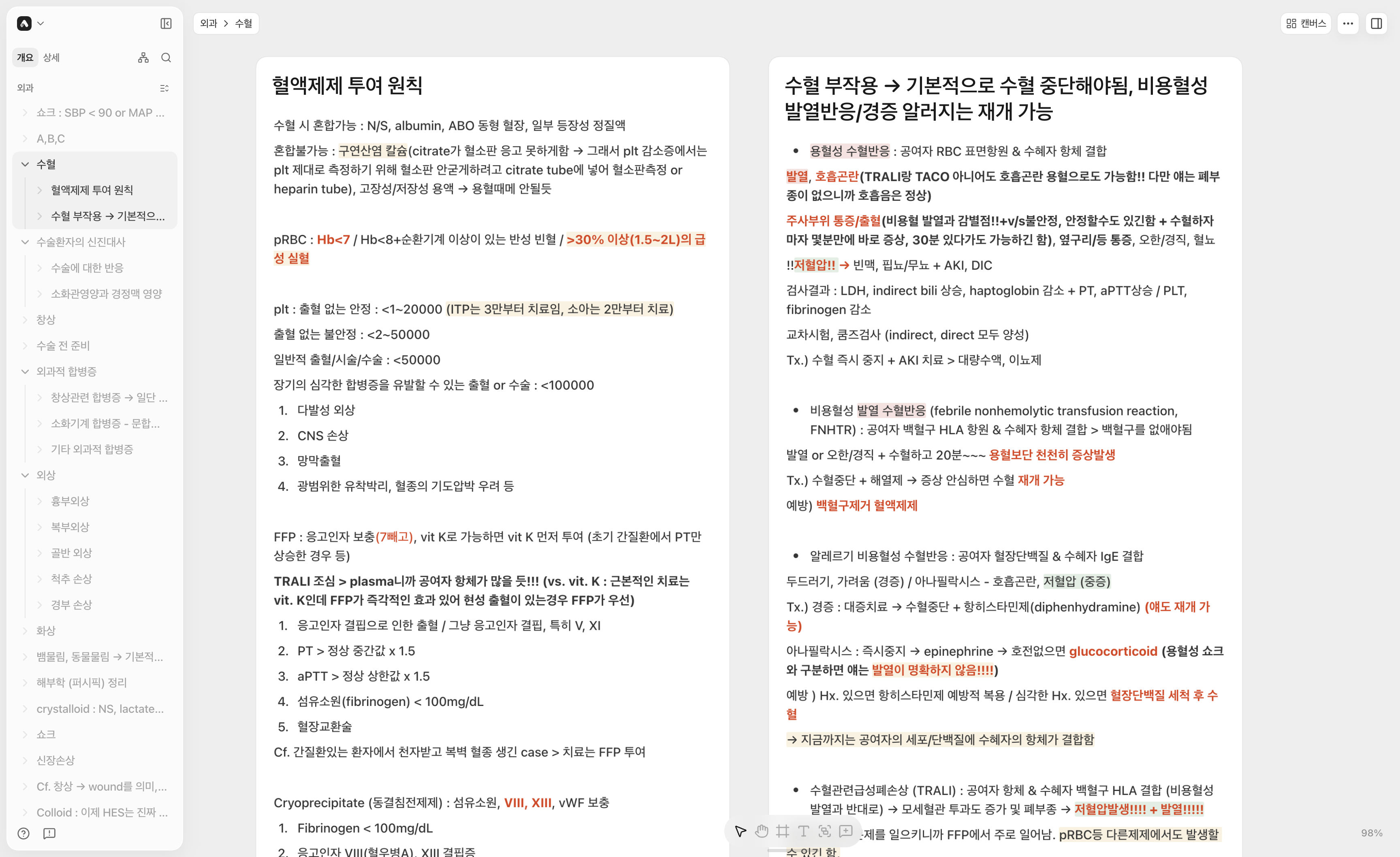
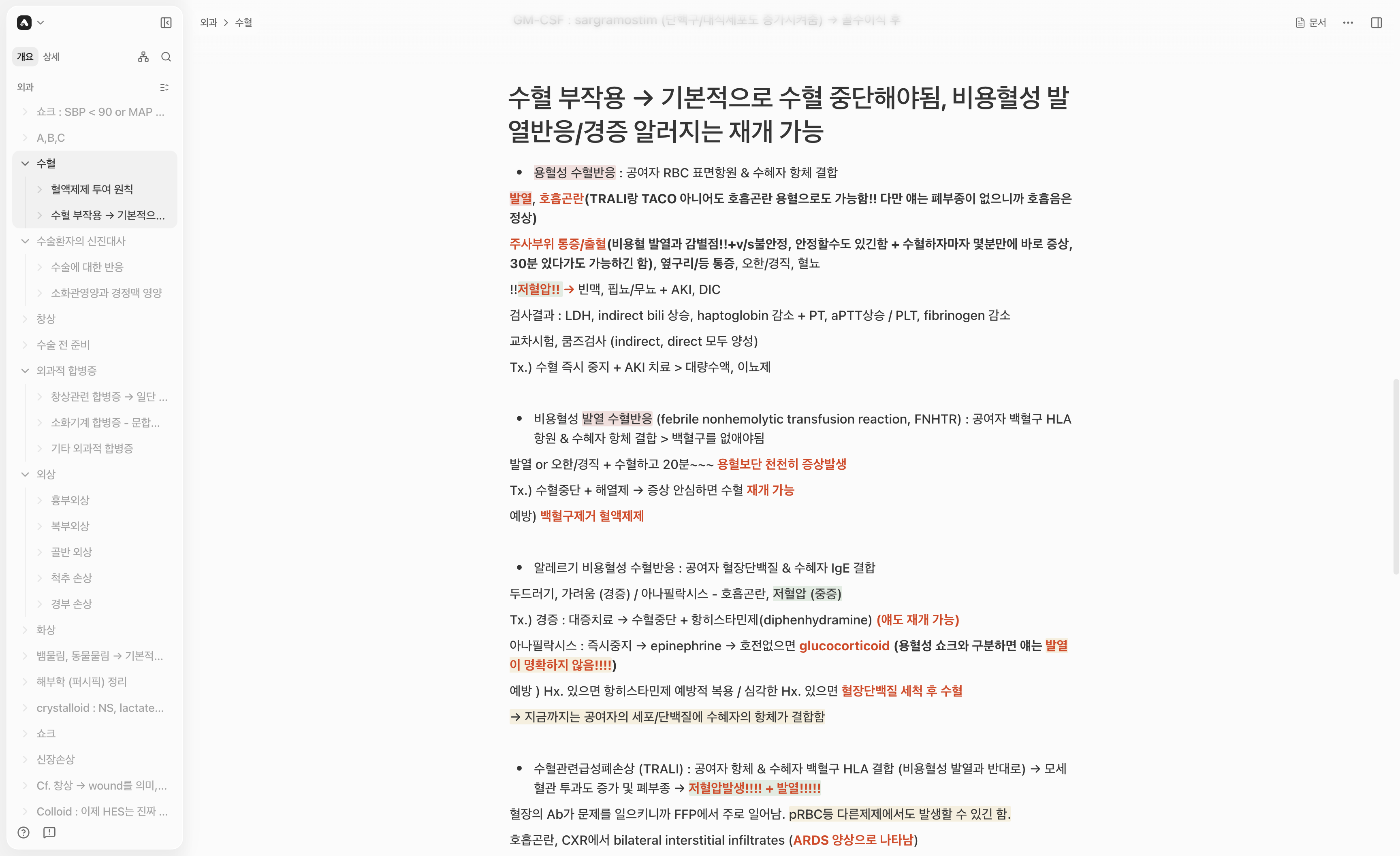
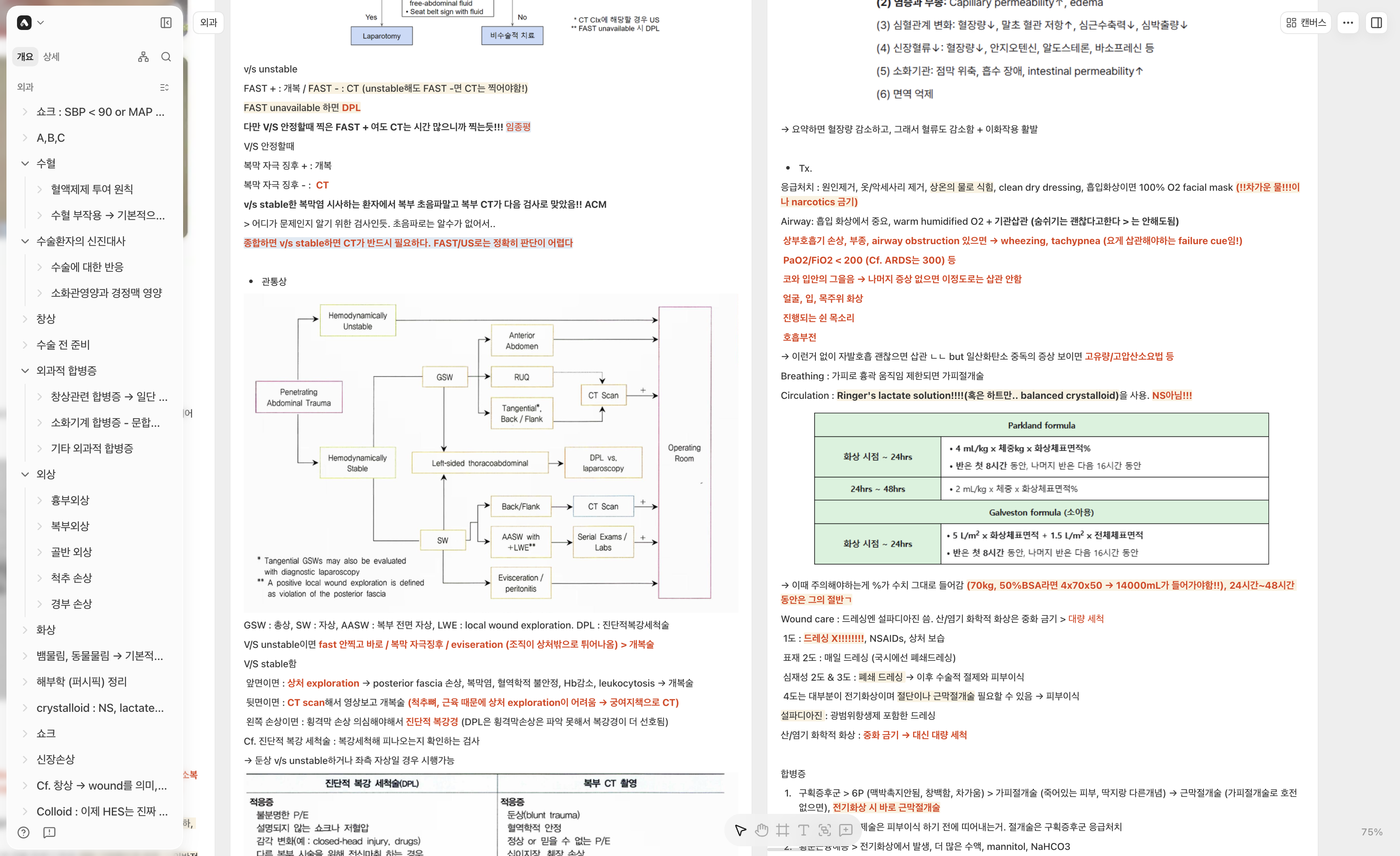
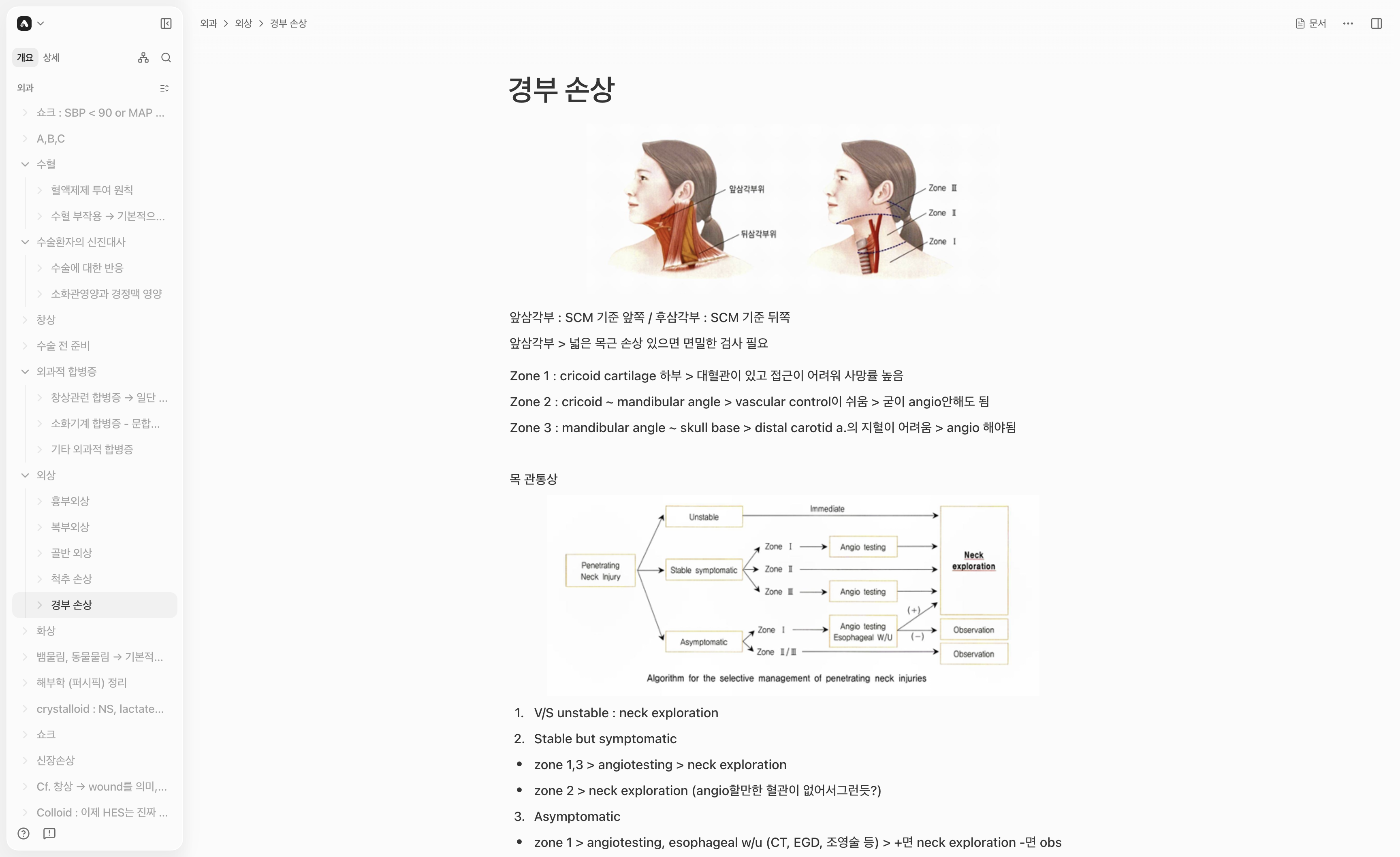
Y: I created a separate project for each subject, like General Surgery, then a shell card for each topic within it, such as Transfusion. I added important points as I worked through the material.
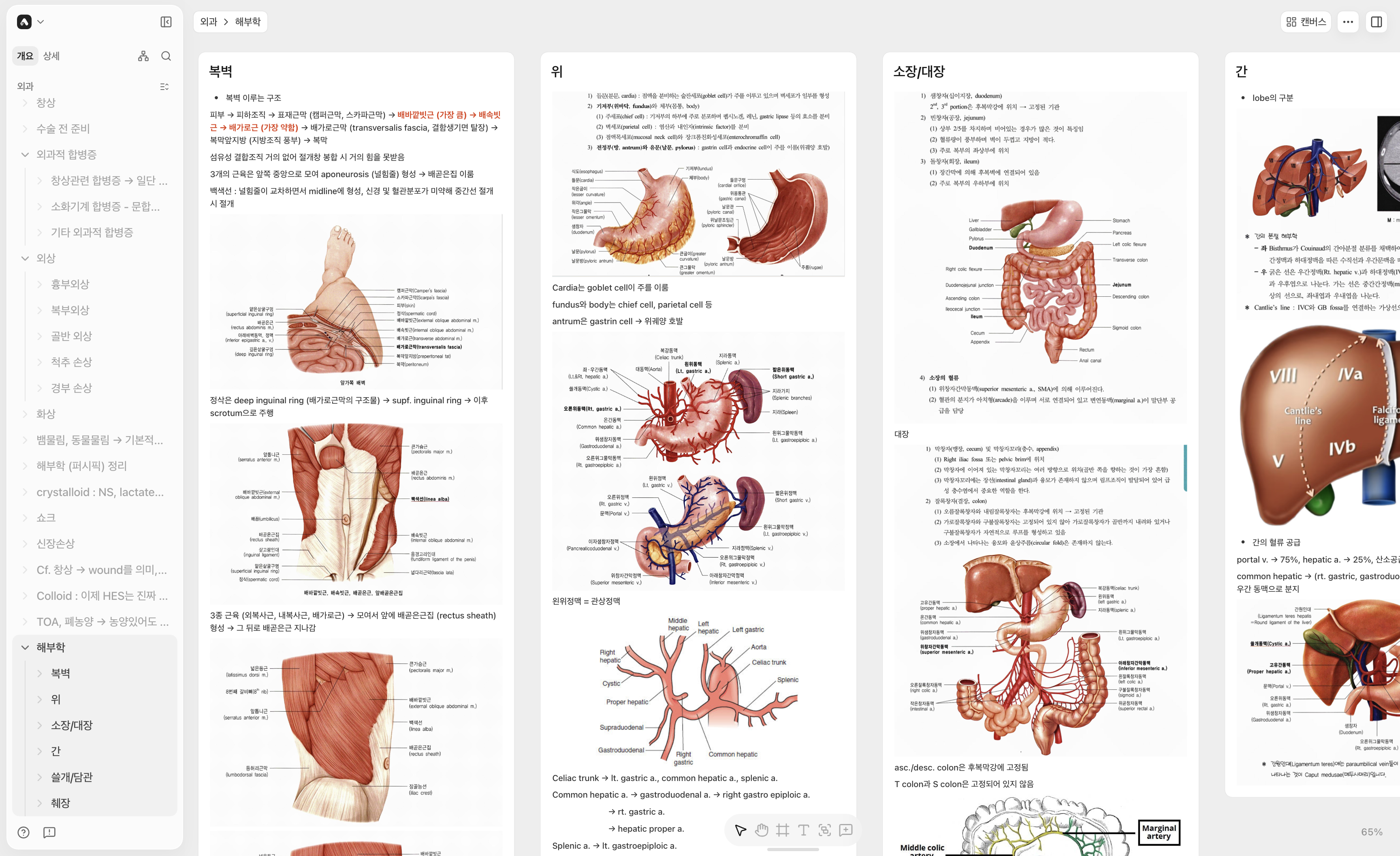
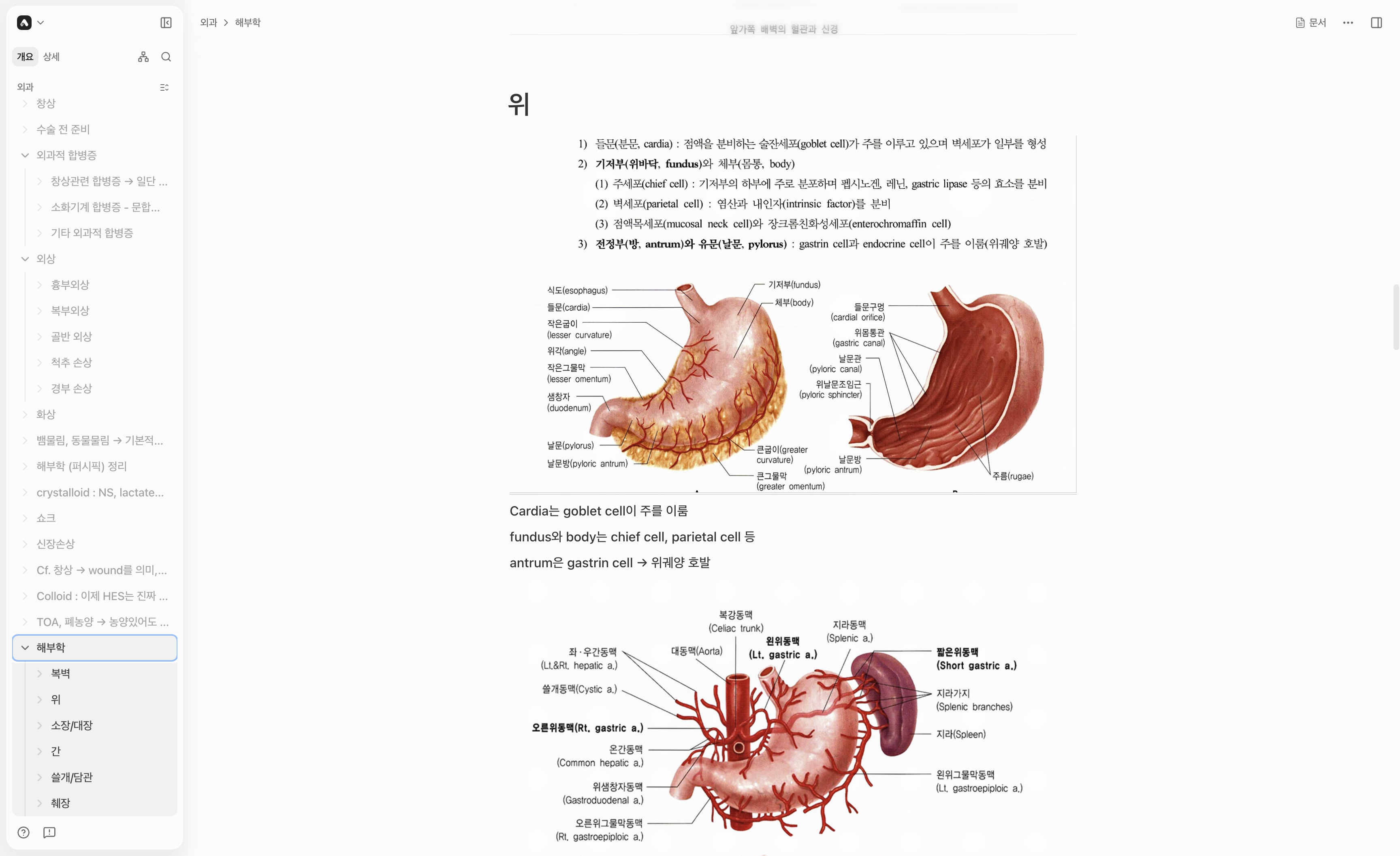
Y: As I reviewed the material again and again, I added anything I had missed. I used red text for important points, blue highlights for topics that had appeared on past exams, and yellow highlights for things I kept forgetting.
I captured relevant photos and tables from my study materials and added them to my notes. For material that wasn't essential but I still didn't want to omit, I attached a screenshot of the source text and reviewed it once.
When a practice question introduced a new concept, I attached a screenshot of the question and wrote down what I had learned beneath it. I also noted what to watch out for so I wouldn't make the same mistake again.
H: Y organized shell cards by subject and topic. What about you, L?
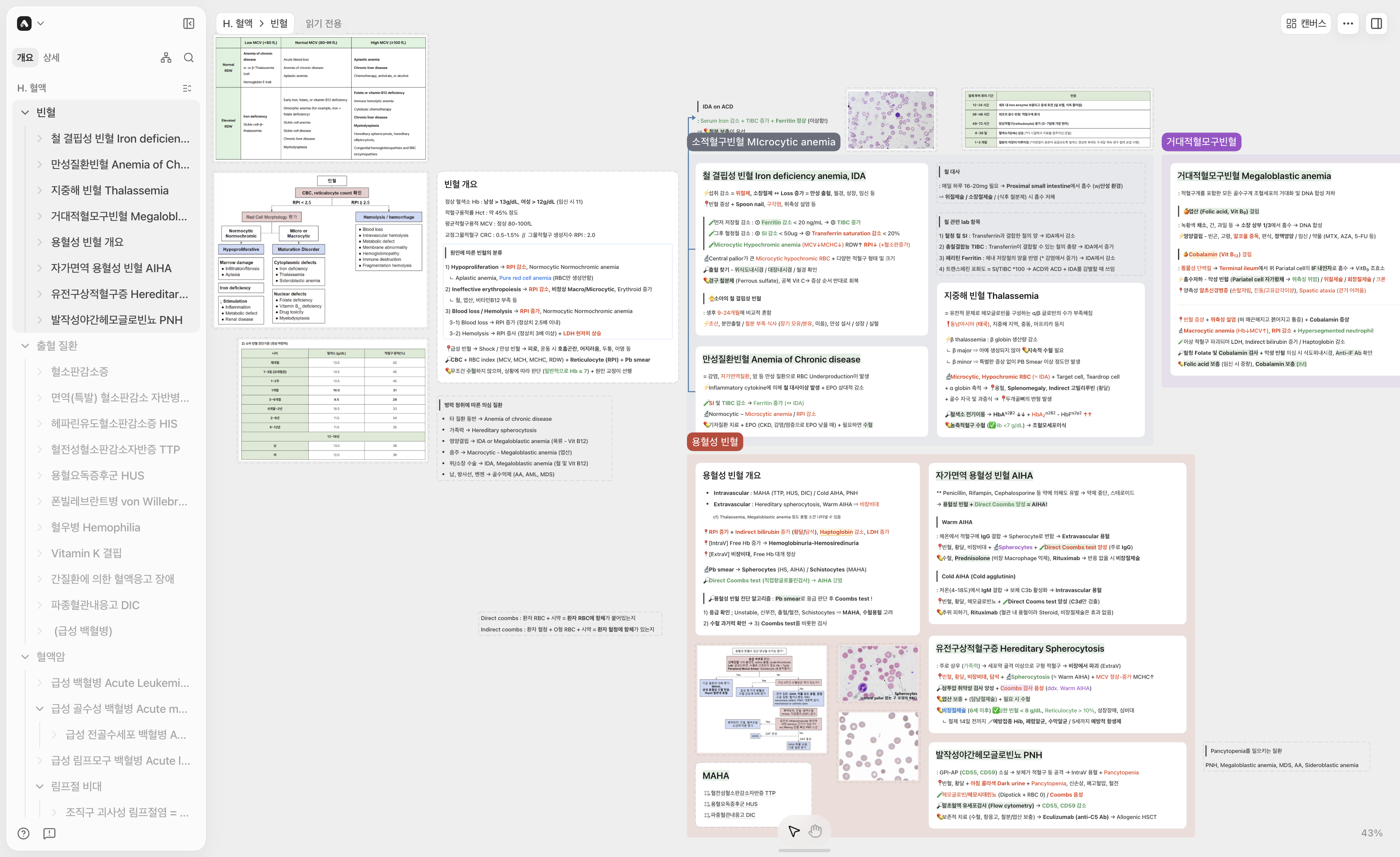
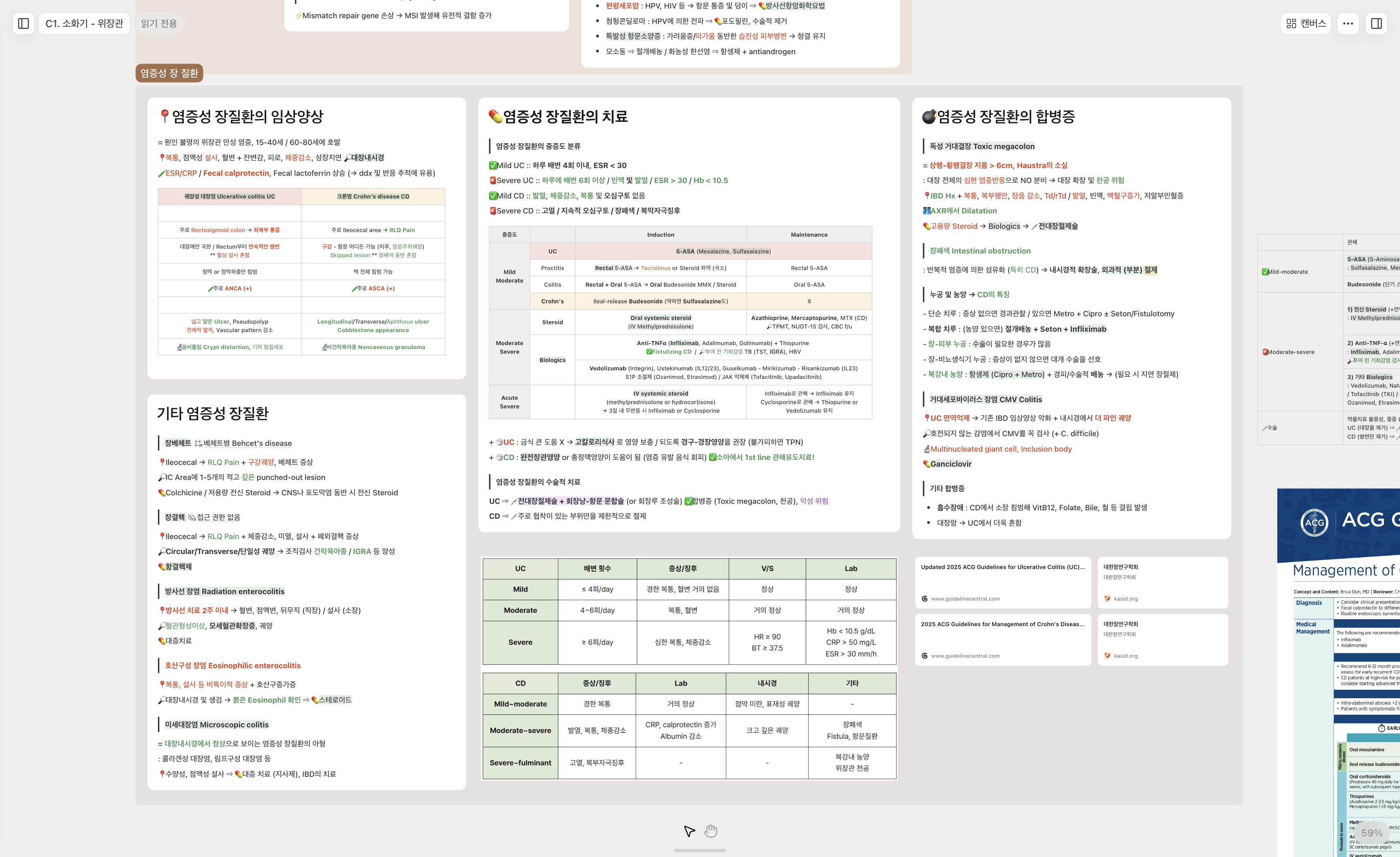
L: I also divided my notes into shell cards by subject and topic. I grouped related concepts into sections and used arrows to show how they related to one another. Seeing several concepts together on one screen made the overall structure and their relationships easier to grasp, and helped me revisit those connections quickly during review.
What did your final review look like?
Y: To score well, I felt it was more important to understand the concepts thoroughly than to repeat the same questions. So I organized every concept I studied in Arky.
H: So during your final review, did you rely only on what you had organized in Arky?
Y: Yes. During my final review, I didn't use popular prep books such as Pacific or Allen's Study. I studied only from the material I had organized in Arky. My own guide highlighted what I personally considered important, so it was much more efficient than studying from someone else's summary. I think many students can relate to that.
Did you use Arky for anything beyond the written exam?
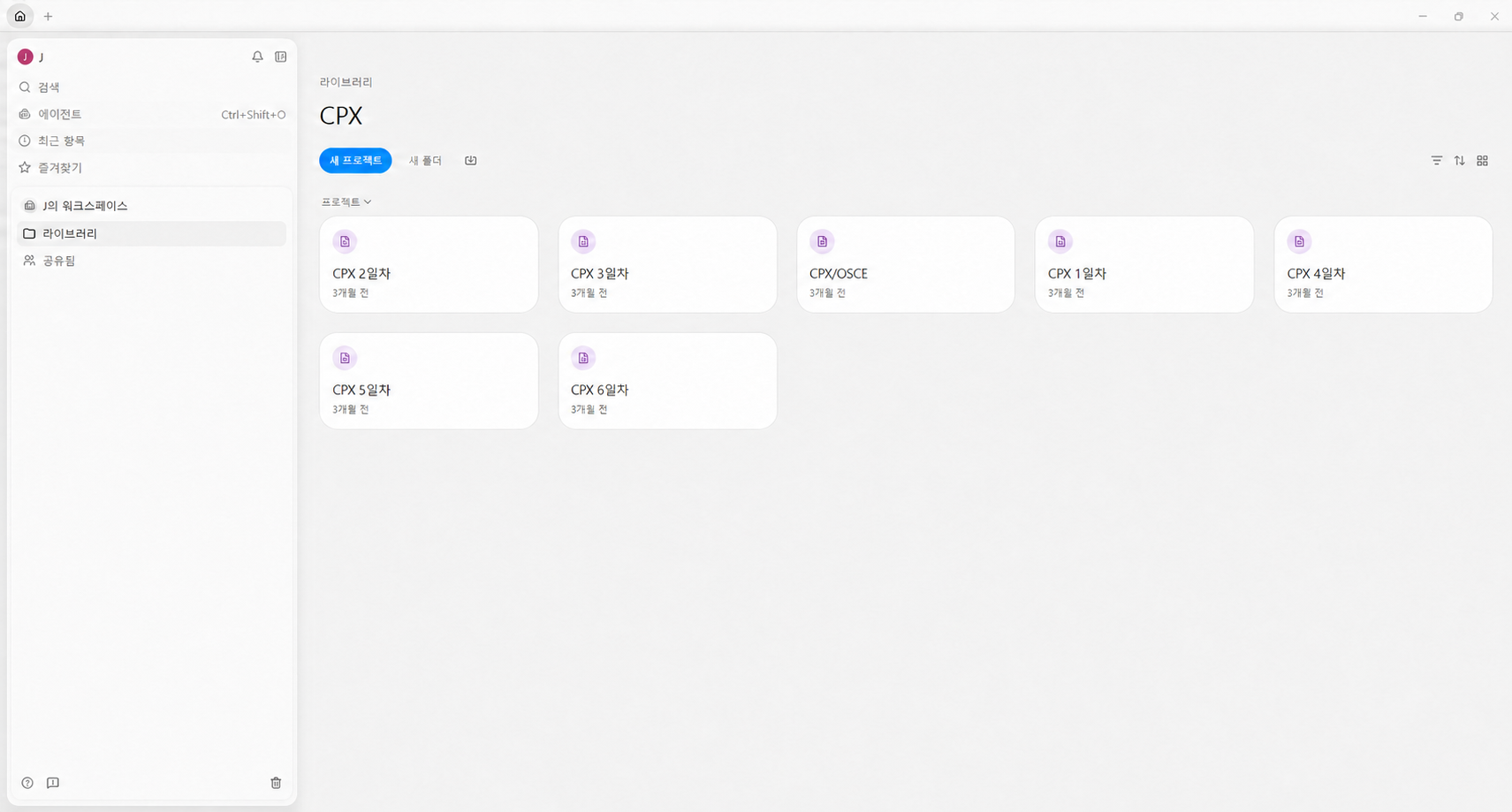
Y: Yes. While preparing for CPX, I organized the history-taking, physical examination, and patient education required for each topic. I highlighted anything I tended to miss and kept track of feedback from my study group. That was especially helpful when I had to learn a large amount of material in a short time.
Who would you recommend Arky to?
Y: I believe bringing everything together in a study guide of your own is essential for doing well on the medical licensing exam.
H: How does it compare with writing notes by hand?
Y: Of course, you can write notes by hand in a book or notebook. But I think Arky has a clear advantage when you need to revise content or add images.
If you're preparing for a licensing exam, a school exam, or any other major test and have never made your own study guide, Arky is a great place to start.
Y and L shared how they used Arky to prepare for the medical licensing exam. Arky helps you organize what you learn visually. We're also working on a mobile version and more features to support learning. Start building a study guide of your own with Arky today.